The Watchmaker Who Taught Himself Everything — And Then Built Something the World Couldn’t Ignore
Hajime Asaoka never went to watchmaking school. He bought a book, watched videos online, and built Japan’s first tourbillon alone in Tokyo. His more accessible brand, Kurono, is one of the most compelling stories in independent watchmaking today. I tried one on at Dubai Watch Week. Here is what happened.


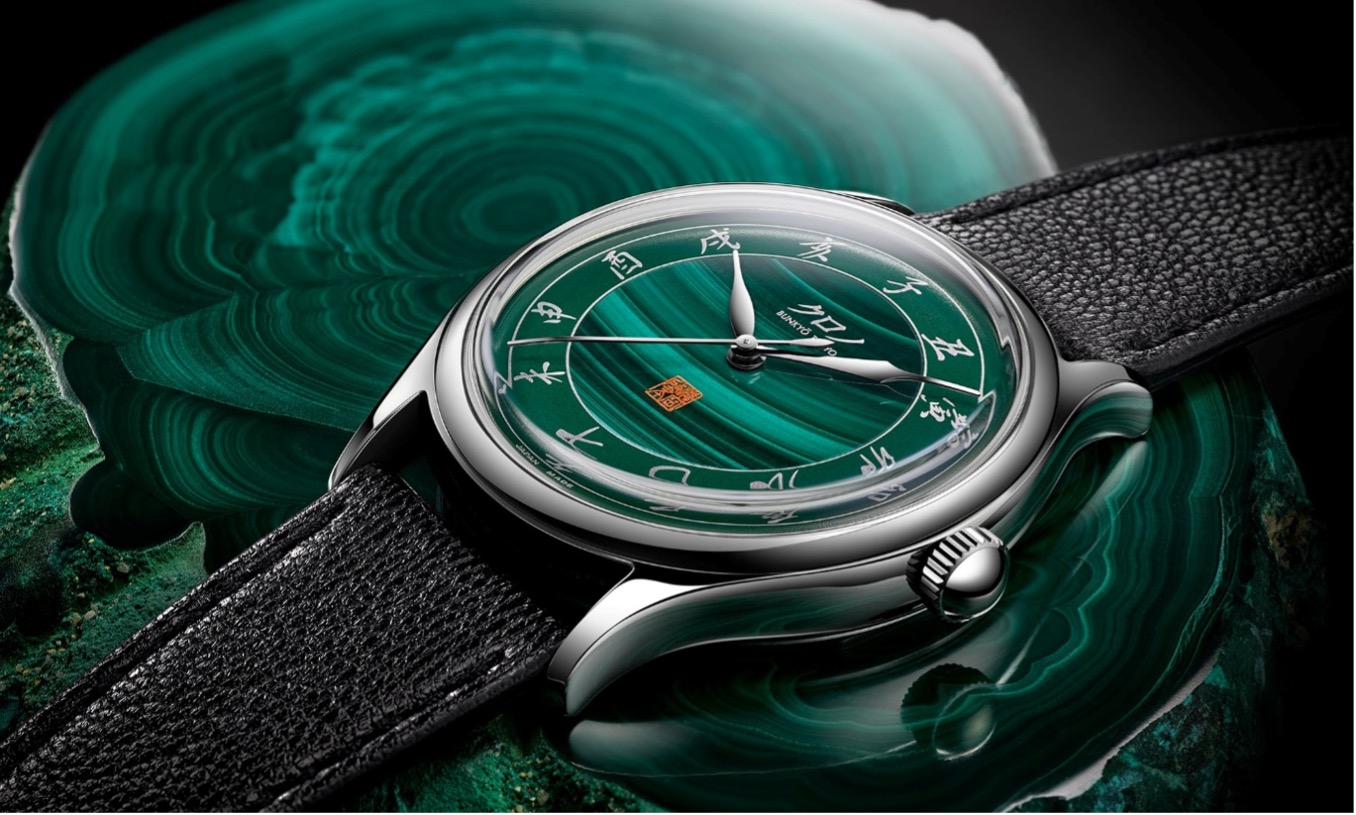
At Dubai Watch Week 2024,between the Patek Philippe display cases and the Rolex booths that attracttheir usual crowds, I picked up a watch that stopped me completely. It wassmall. It was quiet. The dial was the colour of deep water at dusk — agraduated blue-grey that seemed to shift as I turned my wrist under theexhibition lights. There was almost nothing on it. No numerals. No excessivetext. Just a pair of hands, hour markers as fine as brushstrokes, and a depthof finish that had no right existing at this price point.
It was a Kurono Tokyo.And until that moment, though I knew the brand, I did not know the full storyof the man behind it. When I found out, I understood immediately why this watchfelt the way it did.
A MAN, A BOOK, AND A DECISION THAT CHANGED JAPANESEWATCHMAKING
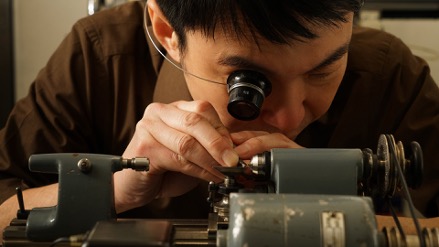
Hajime Asaoka was born in1965 in Kanagawa Prefecture, Japan. He studied product design at the TokyoUniversity of the Arts — not watchmaking, not horology, not even engineering inthe traditional sense. He graduated in 1990 and spent the next fifteen yearsrunning a design consultancy, working on industrial products that demandedprecision, exact tolerances, and aesthetic refinement.
Then, at the age offorty, he decided to teach himself watchmaking.
Let me be clear aboutwhat that means, because as someone who holds certifications from the Fondationde la Haute Horlogerie in Geneva, I have spent considerable time understandingwhat watchmaking actually requires. The construction of a mechanical movementfrom scratch — designing the components, cutting the parts, hand-finishingevery surface, assembling the whole with tolerances measured in microns — isamong the most technically demanding skills in precision manufacturing. Ittakes apprentices years under master watchmakers to learn. Most never achieveit at all.
“Watchmaking is considered a dying art. Here is a manwho decided, at forty, to learn it alone — from a book, from YouTube, in aTokyo workshop — and then produced Japan’s first in-house tourbillonwristwatch.”
Asaoka taught himselffrom George Daniels’ seminal book Watchmaking — the same text considered thebible of the craft — and supplemented it with YouTube tutorials, buyingsecond-hand machines from eBay and teaching himself to use them. He beganproducing watches in 2005. By 2009, he had created Japan’s first in-housetourbillon wristwatch — a complication that takes master watchmakers decades toachieve. The watch world, which had spent centuries assuming serious horologywas a Swiss birthright, paid attention.
THE AHCI, AND WHY IT MATTERS
In 2015, Asaoka wasinducted into the Académie Horlogère des Créateurs Indépendants — the AHCI —the most selective body in independent watchmaking. Members includeFrançois-Paul Journe, one of the most respected watchmakers alive. To beinducted, you must prove that you conceive, design, and produce your ownwatches to the highest standard. You must be recognised by your peers as worthyof belonging.
Asaoka became the firstJapanese watchmaker ever admitted. Self-taught, working alone in Tokyo, with noSwiss lineage, no inherited atelier, no institutional backing. Just mastery,earned the hardest possible way.
ENTER KURONO — THE GIFT TO THE REST OF US
Asaoka’s personal atelierwatches — the Tsunami, the Tourbillon Noir — start at around $25,000 and reachsix figures. His waiting list exceeds his realistic production capacity. He nolonger accepts new orders. If you want a Hajime Asaoka, you either knowsomeone, or you wait years, or you find one on the secondary market and pay asignificant premium.
Kurono was his answer tothat problem — and to a personal one. As he explained it himself: “Personally,I wanted a good, reliable and reasonably priced watch I can use as a dailywearer. 25 years ago, one could get such a watch at ¥200,000 — but it is veryhard these days, and even less so from an independent watchmaker.”
So he created it. Kuronouses sourced Japanese movements — from Seiko and Miyota, both exceptionalcalibres — which allows for greater volume and lower prices than his fullyhandmade atelier pieces. But the design, the dials, the cases, the finishingphilosophy: all Asaoka. He personally mixes the colours for Kurono dialshimself, testing countless shades under different lighting conditions until onemeets his standard. The urushi lacquer dials — a traditional Japanese techniqueusing tree sap, hand-applied in layers over weeks — have a fail rate that makesthem among the most labour-intensive dials in watchmaking at any price point.
“Simple yet complex. Minimalist with a touch ofartistry. The Japanese ethos embodied in a mechanical timepiece.”
WHAT THE DIAL ACTUALLY DOES TO YOU
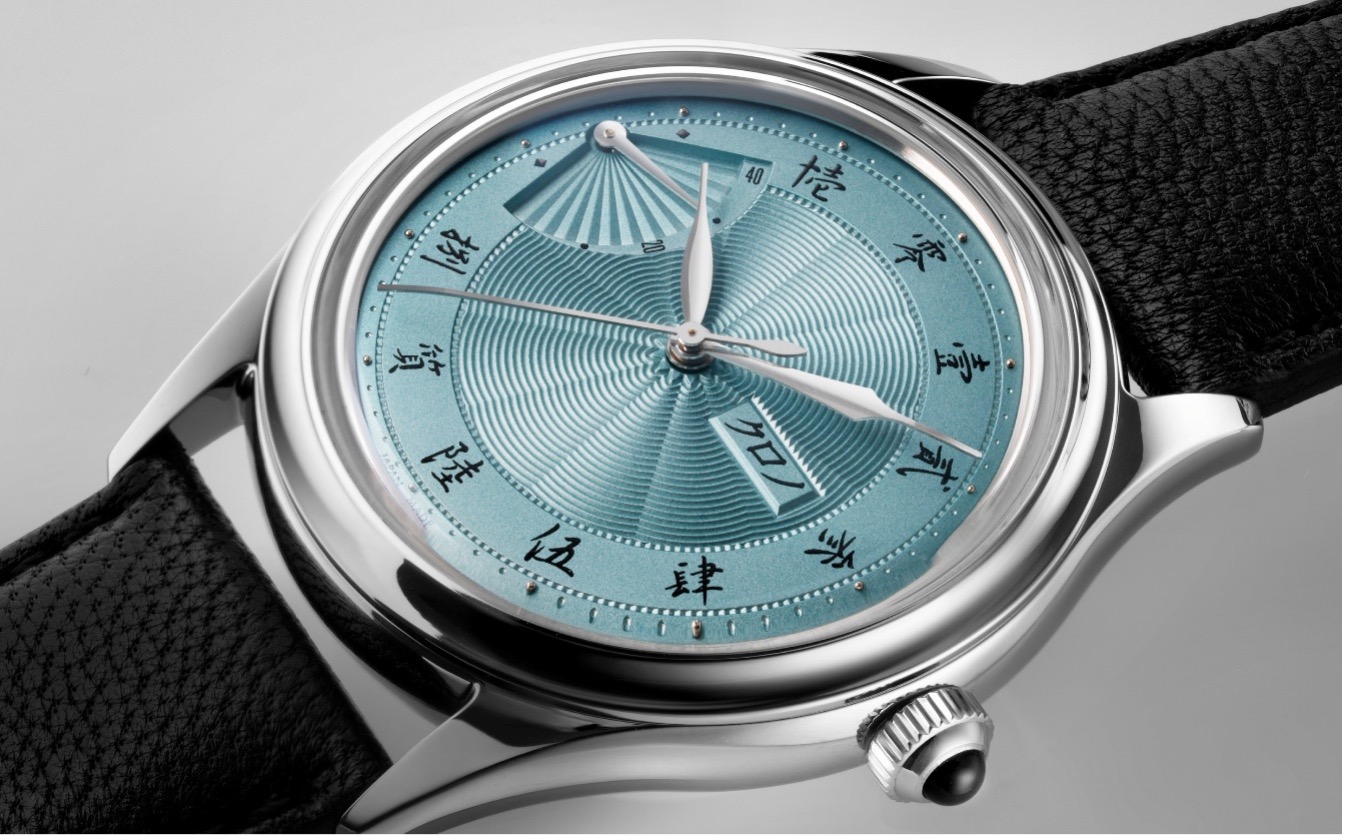
This is where I come backto Dubai Watch Week, and to the moment that started this article. The Kuronodial is not spectacular in the way that a skeleton movement is spectacular, ora tourbillon at six o’clock. It is spectacular in the way a perfectly composedroom is spectacular — you sense that everything is exactly where it should be,that nothing is present that shouldn’t be, and that the person who made thedecisions behind it had both technical mastery and genuine aestheticintelligence.
There are no numerals.There is no date window interrupting the composition. The hour markers areapplied with the kind of precision that makes you look twice. The hands —polished feuille hands, tapered to a needle point — float above the dialsurface with a clarity that most Swiss watches at three times the price don’tachieve. And the colour. The deep, graduated blue of the Toki. The warm,lacquered grey of the Nio. These are not colours chosen from a catalogue. Theseare colours mixed by a man in a Tokyo studio until they were right.
THE DROP MODEL — AND WHY THE GULF IS MISSING OUT
Kurono releases newlimited editions in quarterly drops — batches of 50 to 500 pieces depending oncomplexity, sold through online windows that open at announced times.Collectors worldwide set alarms. They refresh pages. They queue digitally,knowing that in minutes the release will be gone.
This model is not agimmick. It is a brilliant solution to one of the hardest problems inindependent watchmaking: how do you build sustainable revenue withoutcompromising scarcity, without taking on debt, without building a distributionnetwork you can’t control? The drop model lets Asaoka gauge demand beforecommitting to production. It keeps each release culturally significant. And itbuilds a community — collectors who follow the brand not just for the watchesbut for the conversation Asaoka builds around them.
Gulf collectors arealmost entirely absent from this conversation. This is not because the Gulfdoesn’t appreciate quality — it manifestly does. It is because the Gulf watchmedia has not pointed people in this direction. That is the gap this columnexists to close.
WHO THIS WATCH IS FOR
Kurono is not abeginner’s watch in the sense of being simple or undemanding. It is abeginner’s watch in the sense that it is an extraordinary entry point intoindependent watchmaking — a way to own something designed by an AHCI member,built with the same aesthetic intelligence as pieces costing fifty times more,at a price point that makes it genuinely accessible.
For the serious Gulfcollector who already owns Swiss references, a Kurono is the watch that sayssomething different about you. It says you’ve gone further than the boutiqueson Sheikh Zayed Road. It says you’ve found something the market hasn’t caughtup with yet.
For the person who loveswatches but thinks serious collecting requires a six-figure budget, Kurono isthe evidence that it doesn’t. Quality is not always correlated with price.Craft is not the exclusive property of Switzerland. And the most interestingwatches in the world are not always in the places you’ve been told to look.
At Dubai Watch Week, Iset that Kurono down after trying it on. I thought about it for two weeks. Thedial still lives in my head — that colour, that stillness, that sense ofabsolute intentionality. That is what a great watch does. It stays with youlong after you’ve taken it off. Hajime Asaoka, working alone in Tokyo with abook and a dream and forty years of gathered discipline, makes watches that doexactly that.
KURONO TOKYO — AT A GLANCE
- Founded: Tokyo, Japan — by Hajime Asaoka
- Parent brand: Hajime Asaoka Tokyo — AHCImember since 2015, Japan’s first
- Movements: Sourced Japanese (Seiko, Miyota)— case, dial, design by Asaoka
- Price range: $1,430 – $5,000 USD depending onmodel and dial
- Production model: Limitedquarterly drops, 50–500 pieces. Sells out within minutes
- Key models: Nio, Toki, Kamasu, Grand series(urushi lacquer dials)
- Where to buy: kuronotokyo.com — online dropsonly. Also: Kurono Aoyama salon, Tokyo
- Secondary market: Mostmodels trade above retail. Grand series at significant premium