The Perpetual Calendar — The Greatest Complication Ever Made, and Why It Matters
In 1762, a watchmaker in London solved a problem that had confounded civilisation for centuries — using nothing but metal, springs, and geometry. More than 260 years later, the solution still runs on your wrist. This is the story of the perpetual calendar: what it is, how it works, and why it is the complication that moves me most.


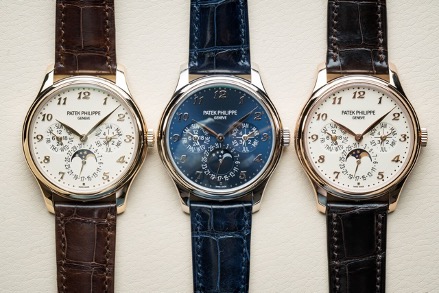
Here is a problem thatkept some of the finest minds in history awake at night. The calendar — thesystem by which human civilisation organises itself, tracks seasons, plansharvests, schedules prayer — is, from a mathematical standpoint, a mess. Monthshave 28, 29, 30, or 31 days depending on rules that don’t follow any simplepattern. Every four years an extra day appears. Every hundred years that extraday disappears again, except every four hundred years when it doesn’t. Theresult is a system so irregular that for centuries, no mechanical device couldtrack it automatically. You simply had to remember, or to adjust.
In 1762, an Englishwatchmaker named Thomas Mudge decided this was unacceptable. He built a pocketwatch that knew — mechanically, without being told — exactly how many days werein every month, including February, including leap years. He did it with metaland springs and geometry alone. No battery. No microchip. No digital memory.Just the permanent, physical intelligence encoded in the shape of a cam.
That watch now sits inthe British Museum. And the mechanism it contains — the perpetual calendar —is, in my view, the greatest complication in the history of watchmaking. Notthe most technically complex. Not the rarest. The greatest, because it solved areal problem in a way that remains, 260 years later, completely and beautifullysufficient.
THE PROBLEM IT WAS BUILT TO SOLVE
To understand why theperpetual calendar matters, you have to understand the problem it was designedto solve — and how elegantly mechanical watchmaking solved it.
The Gregorian calendar,which the world uses today, has twelve months of irregular length. Seven monthshave 31 days. Four have 30. February has 28, or 29 in a leap year. A simplecalendar watch — the kind that displays a date — needs to be corrected at theend of every short month, because its mechanism assumes every month has 31days. Miss that correction and your watch tells you it is the 30th of February.
A perpetual calendarwatch never needs that correction. It knows. Every month length is encodedphysically into its mechanism, along with the four-year leap year cycle. Windit, set it once, and it will display the correct date in perpetuity — or moreaccurately, until the year 2100, when an exceptional irregularity in theGregorian calendar requires a single manual adjustment. One correction. In theyear 2100. That is what the perpetual calendar promises.
“They found solutions to problems they were facing. In1762, having all this calendar data accessible in one complex mechanicalmachine was a profound answer to a very real need. That spirit ofproblem-solving is what I love most about this complication.”
HOW IT ACTUALLY WORKS — THE CAM
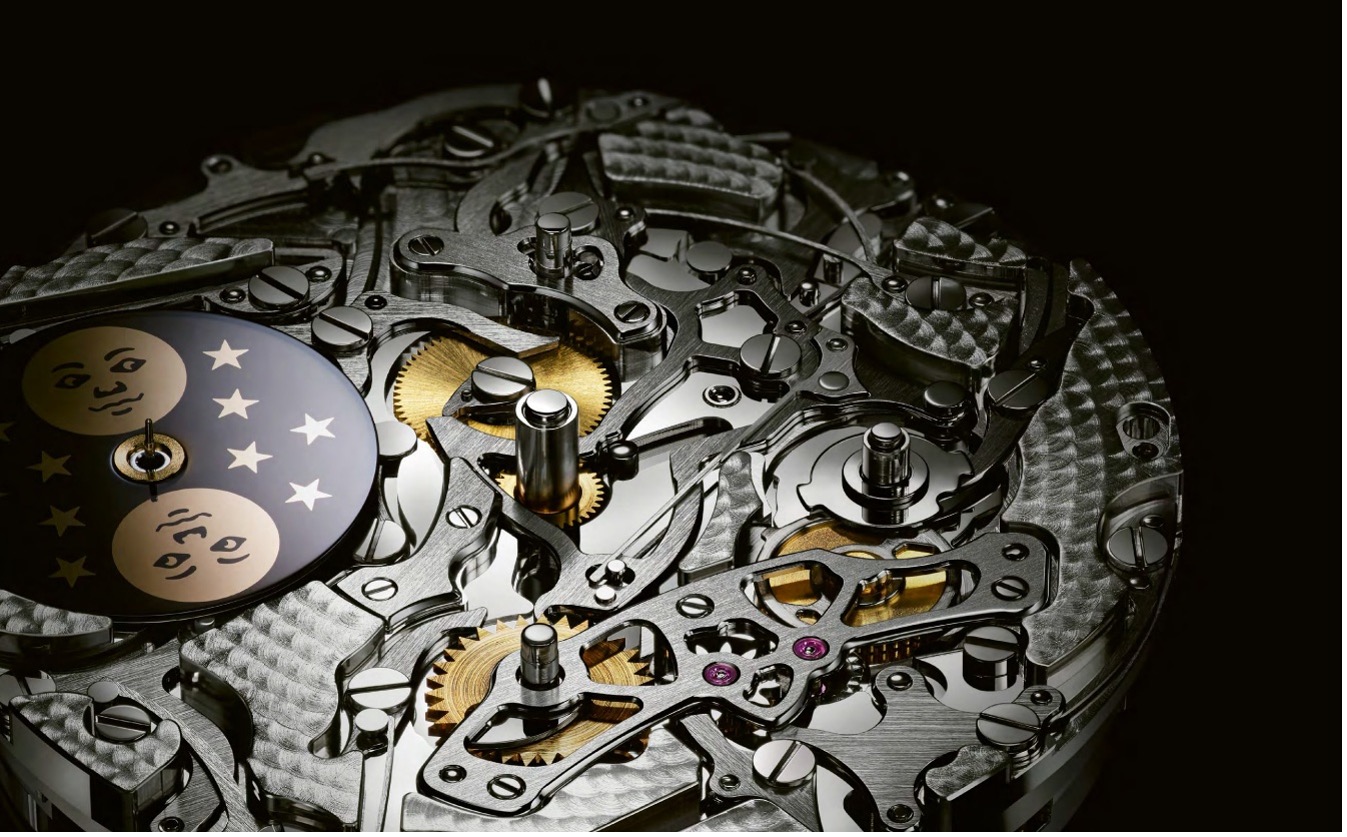
The mechanism behind the perpetualcalendar is, at its core, astonishingly logical. The solution came from asingle component: the cam.
A cam is a metallic discwith an uneven perimeter — different depths cut into its edge at differentpoints. In a perpetual calendar, the main cam completes one full rotation every48 months — exactly four years, the length of one complete leap year cycle. Asit rotates, a feeler-spindle rides against its edge, reading the depth of eachnotch like a finger reading Braille. A shallow notch tells the mechanism: thismonth has 31 days. A deeper notch: 30 days. The deepest notch of all: February28 or 29 days depending on where we are in the four-year cycle.
That feeler transmits itsreading through a series of levers — in many movements, a single grand leverthat stretches the full width of the movement — which in turn governs how farthe date wheel advances at month’s end. When April finishes, the mechanismskips the 31st and jumps straight to the 1st of May. When February ends, itjumps over the 29th, 30th, and 31st in a single motion — or, in a leap year,only the 30th and 31st.
The entire systemcontains approximately 200 additional components beyond a standard movement. Itrequires months of hand assembly and adjustment. And it does all of this silently,invisibly, automatically — every day, for decades, without asking anything ofyou.
1762 TO 1925 — A CENTURY AND A HALF OF PROGRESS
Thomas Mudge built hisfirst perpetual calendar pocket watch in 1762. He built a second in 1764 — thatone, cased in gold, lives today in the British Museum. Both are mechanicallyand visually similar, with a date disc, a day of the week aperture, a monthindicator, and — remarkably — a separate auxiliary display for February andleap years.
After Mudge, thecomplication went almost silent for nearly a century. The extreme complexityand precision required meant few watchmakers could attempt it, and fewer stillcould execute it successfully. It wasn’t until the 1860s that Patek Philippebegan producing perpetual calendar pocket watches — taking until 1889 to patenttheir mechanism.
The first perpetualcalendar wristwatch came in 1925. It was made by Patek Philippe, reference97975, commissioned by a collector named Thomas Emery. The movement inside itwas partially manufactured in 1898 and sat unused for 27 years before beingadapted for the wrist. That is how long it took to miniaturise the mechanismsufficiently — 27 years of waiting for the craft to catch up with the ambition.

WHAT FOLLOWED — THE GOLDEN ERA
Once the wristwatchperpetual calendar existed, the great houses threw themselves into refining it.Patek Philippe in particular made the complication their own. In 1937 theyintroduced a retrograde perpetual calendar. In 1941 they produced the firstperpetual calendar chronograph. In 1962 came the first self-winding perpetualcalendar, reference 3448, a milestone no other manufacturer matched for sixteenyears.
Audemars Piguet answeredwith their own landmark in 1978 — an ultra-thin automatic perpetual calendar movementthat solved one of the central problems of the complication: thickness. Aperpetual calendar adds 200 parts to a movement. Audemars Piguet compressedthem to a height that made the watch genuinely wearable, genuinely elegant.
WHY THIS IS MY FAVOURITE COMPLICATION
I have held and studiedmany complications. The tourbillon is more visually arresting. The minuterepeater is more emotionally immediate. The grand complication is a greatertechnical achievement in absolute terms.
But the perpetualcalendar is the one I return to. And the reason is the one I find hardest toexplain to people who haven’t encountered horology seriously: it is thecomplication that thinks.
“The perpetual calendar is a mechanical algorithm. Itsprogramming is not digital code — it is physical geometry. The precise shape ofa cam, the length of a lever, the number of teeth on a gear. This physical codeis built to run flawlessly for over a century.”
Every other complicationtells you something about time. The chronograph measures it. The tourbilloncorrects for gravity’s effect on it. The moonphase connects you to its cosmicrhythm. But the perpetual calendar reasons about time. It knows that Februaryis shorter. It knows that every four years an extra day appears. It holds thisknowledge in its metal and releases it, day after day, without error andwithout complaint.
In 1762, Thomas Mudgelooked at the problem of the calendar — irregular, irrational, the product ofcenturies of political and astronomical compromise — and encoded the solutionin metal. He did not wait for electricity. He did not wait for the microchip.He used what existed: springs, gears, levers, and the permanent mathematics ofphysical form.
That, to me, is whatwatchmaking at its greatest has always been. Not decoration. Not status. Asolution — precise, permanent, and beautiful — to a problem that mattered.
NOTABLE PERPETUAL CALENDAR REFERENCES — FOR THE GULFCOLLECTOR
Patek Philippe Ref. 5327: The purest expression of the complication. Elegant,understated, the benchmark.
Patek Philippe Ref. 5320G: Retro-inspired, warm dial palette. One of the mostbeautiful modern perpetual calendars made.
A. Lange & Söhne Langematik Perpetual: German engineering meets perpetual calendar. Theoutsize date is unlike anything else.
Audemars Piguet Royal Oak Perpetual: The perpetual calendar in a sports case.Controversial and compelling in equal measure.
IWC Portugieser Perpetual: Accessible entry to the complication. Clean, legible,well-finished for the price.
Jaeger-LeCoultre Master Perpetual: Exceptional value for the level of movementfinishing. Underrated in the Gulf market.