The Engineer Who Built Other People's Watches for a Decade Just Debuted His Own; With an Escapement Nobody Has Used Before
Mathieu Cléguer spent over ten years constructing movements for Akrivia, Breva, and Emile Chouriet without his name ever reaching a dial. His debut, the Cléguer Inspiration One, changes that, and it runs on a proprietary escapement geometry he calls Innate.


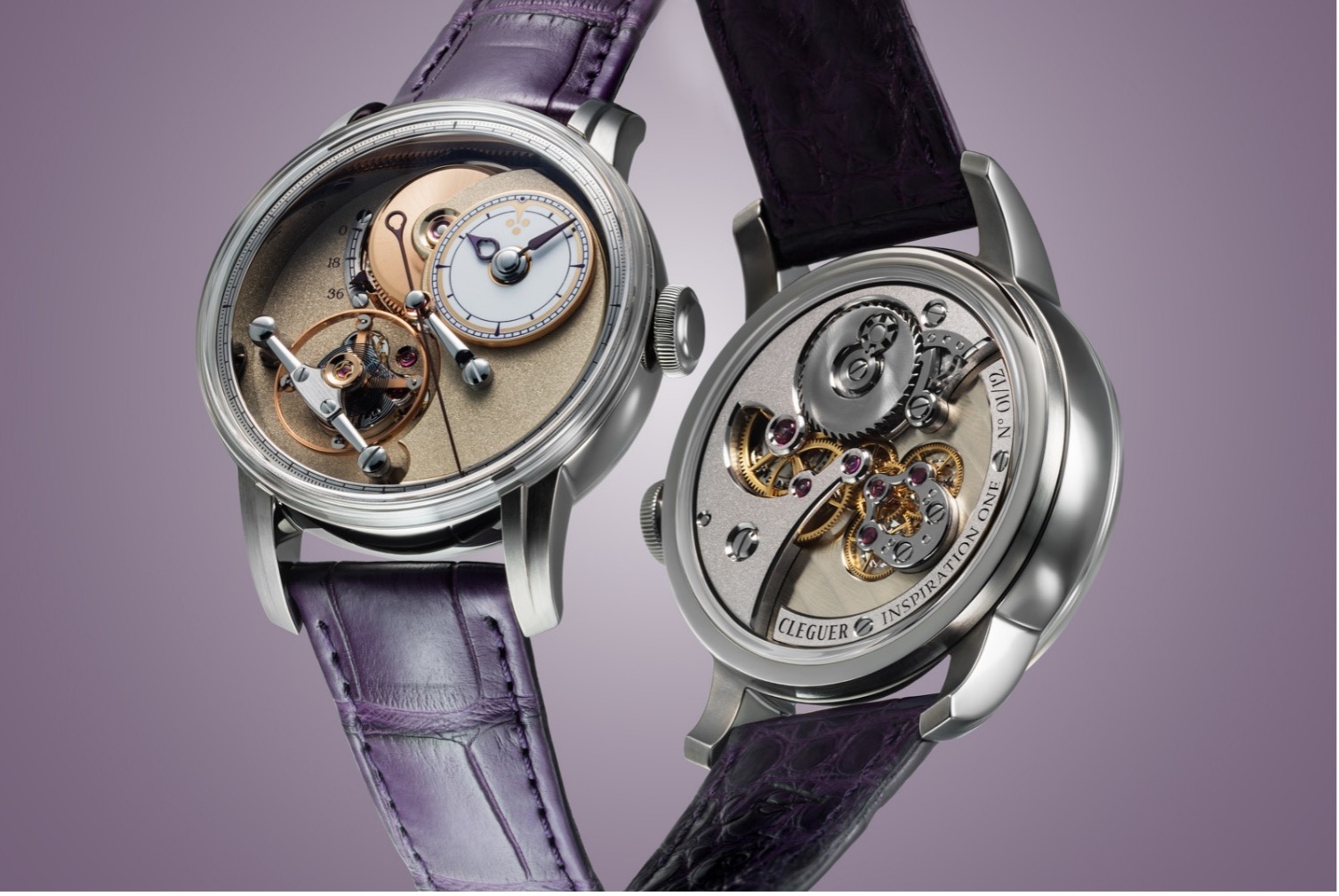
Independentwatchmaking has a category of names that rarely make it onto a dial, and almostnever make it into a headline: the movement engineers. They are the people whotake a designer's ambition and a watchmaker's signature and work out whethereither can exist in metal; the ones who solve the tolerances, themanufacturability, the thousand small decisions that separate a concept sketchfrom a functioning calibre. Mathieu Cléguer has spent more than a decade asexactly that kind of name. In 2026, for the first time, his own name is the oneon the case.
The watch is calledthe Inspiration One, and it is not a modest debut. It arrives regulated by anew escapement of Cléguer's own design: a genuinely uncommon thing for a firstrelease, since most independents spend years building a reputation before theyrisk something this structurally ambitious. For a column built around thetechnical side of watchmaking, that is precisely why he belongs here.
The Engineer Behind the Engineers
Cléguer trained atHE-ARC in Neuchâtel, earning a degree in micromechanics with a major inwatchmaking engineering. By his second year, movement construction, not design,not dial work, the actual mechanical architecture underneath, had become hisfocus. A formative mentorship followed with independent movement constructorChristophe Beuchat, under whom Cléguer completed his final academic project andbegan working on early-stage concepts, some of which never reached production.That is a normal part of the job description in this corner of watchmaking:most of what a movement engineer builds is for someone else's name, and much ofit never becomes a watch at all.
His early professionalpath moved through some of the more serious addresses in independent horology.An internship with De Bethune, under Denis Flageollet, gave him his first realexposure to haute horlogerie construction. A stint at Breva Genève ended whenthe company collapsed, an experience Cléguer has described as clarifying ratherthan discouraging, since it taught him he was unlikely to be satisfied assomeone else's employee long-term. Between 2016 and 2017 he worked at Akrivia,under Rexhep Rexhepi, contributing to the AK-06 and, to a lesser extent, theAK-05: two references now considered benchmarks of the current independentscene. He then joined Emile Chouriet, eventually becoming Head of Research andDevelopment, in a role that was more classical and industrial in scope than hisearlier independent work, but one that taught him the discipline of structured,repeatable production: stock management, process tracking, the reality of acomponent passing through five or six stages before it ever reaches assembly.

A Debut Funded by Trust, Not Investors
Eventually Cléguer setup his own consulting practice, developing movements for other brands on aproject basis while his personal project continued in parallel. The decision tocommit fully to his own name came later, and the Inspiration One was built overthe better part of a decade before it became a finished watch. Rather thanraising capital in the conventional sense, Cléguer funded the debut through asubscription model: twelve early clients, each paying a fifty percent deposit,some of them more than two years before delivery. There was no externalinvestor and no bank loan behind the Inspiration One Souscription — only twelvepeople willing to commit to a watch that did not yet exist, based on thereputation of an engineer whose name most of them had never seen on a dial before.
Reading the Inspiration One
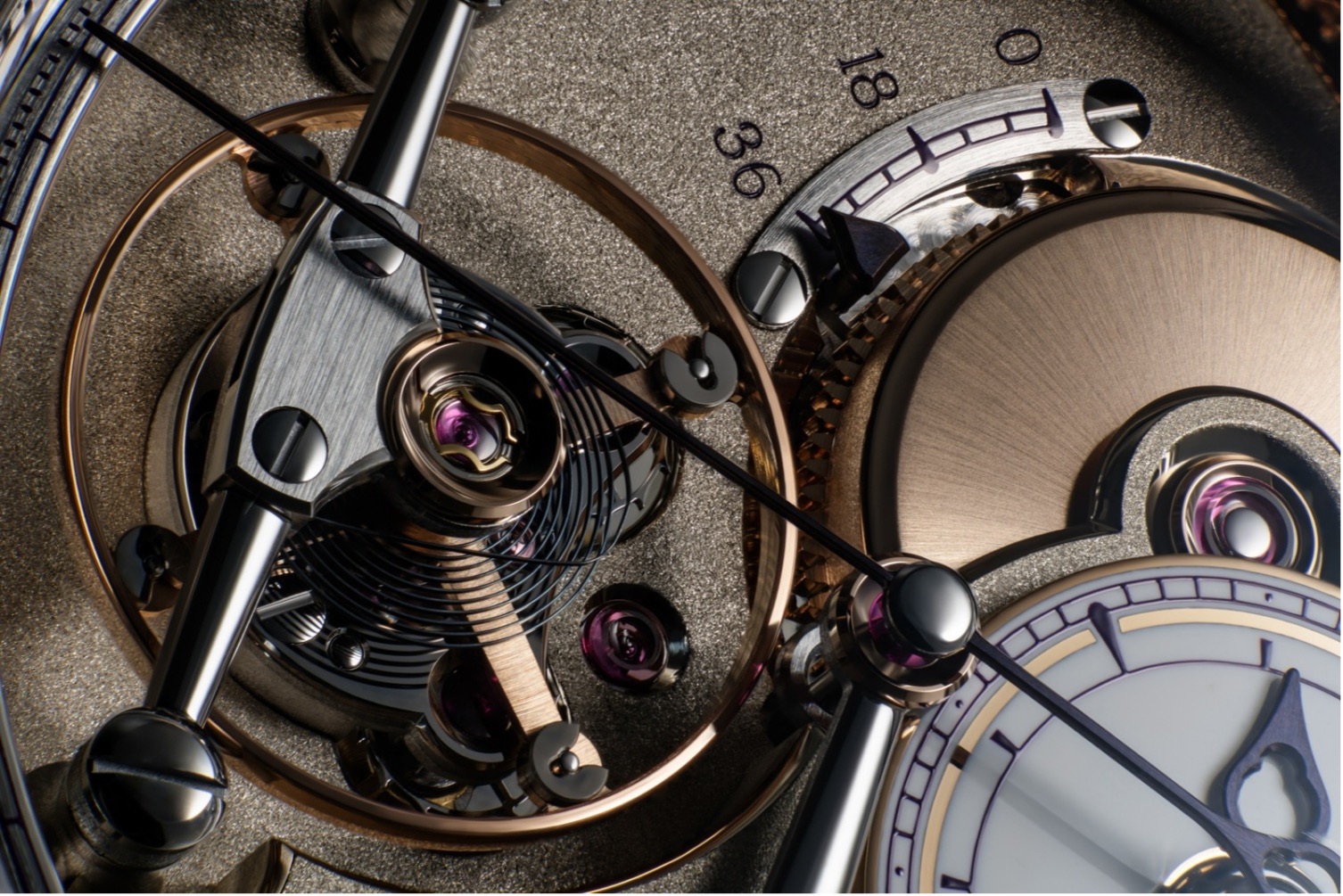
The Inspiration One isa time-only watch, but 'time-only' undersells what is happening on its dialside. Hours and minutes sit on a decentred, champlevé Grand Feu enamel subdial,pushed off-axis to make room for an elongated central seconds hand that sweepsacross the open architecture surrounding it. A power reserve indicator isworked directly into the barrel itself rather than tucked into a separatesubdial; function folded into structure rather than added on top of it. Themovement is built in visible layers, descending in tiers from that centralseconds hand down through the barrel bridge to the main plate, with anoversized 12.9mm balance wheel and the twin escape wheels of Cléguer's ownescapement positioned symmetrically at the centre of the composition. The wholelayout is designed around one idea: the regulating organ, the part of the watchthat actually keeps time, should be the thing your eye is drawn to first, not atechnical footnote hidden under a bridge.
The Craft: An Escapement That Doesn't Exist Anywhere Else
Most technicaldistinctions in watchmaking marketing are decorative. This one is not, and itis worth taking slowly, because it is the actual reason this watch belongs in acolumn about craft rather than a column about new releases.
Cléguer calls it theInnate, and its geometry draws on two historical references: Breguet's naturalescapement and the chronometer escapement developed by the American watchmakerCharles Fasoldt. Structurally, it is a double-wheel, indirect-tangential impulseescapement. Two steel escape wheels mesh on their underside, offset from eachother by exactly half a tooth. A broad lever, carrying the locking stones andimpulse pallet, governs which wheel is locked and which is delivering impulseat any given moment. Over a full oscillation, each wheel advances by one toothspacing, and crucially, the wheel under tension from the barrel is also the onepositioned to deliver impulse once it unlocks, rather than that energy going towaste as the mechanism resets.
The half-tooth offsetalso gives the escapement a genuinely useful property: it is self-starting.Traditional natural escapements are notorious for needing a manual kick-startwhen the mainspring is fully wound down, because there is no guarantee thegeometry will initiate oscillation on its own. Because Cléguer's two wheels arepermanently offset, as soon as torque returns to the gear train, one escapetooth is mechanically guaranteed to strike a pallet and begin the cycle, noshake, no assist required.
It is worth beingprecise about what makes this meaningful rather than merely inventive.Functionally, the Innate escapement is close to the double-wheel geometryinside Rolex's modern Dynapulse escapement; but where Rolex executes that ideain silicon at industrial scale, Cléguer has built his version by hand, insteel, with ruby impulse and locking stones, using construction techniques thatbelong to traditional chronometry rather than modern materials science. Thesame underlying idea, arrived at independently and built with an entirelydifferent set of tools — that is a genuinely useful distinction for a collectorto understand, not a marketing footnote.
An escapement that isfunctionally close to what a major manufacture built in silicon, achievedinstead through hand-finished steel and ruby, by one engineer working largelyalone: that gap between the two approaches is the whole story of independentwatchmaking in a single component.
Finishing That deserves a Second Look
The Inspiration One'sfinishing follows the same philosophy as its architecture: restrained until youlook closely, then dense with detail. The layered plates carry a soft grainingthat plays differently across each tier as light moves. Steel components aremirror-polished, with sharp internal anglage applied wherever the geometryallows it. The barrel's click wheel, governing the Maltese-cross stopwork thatlimits the usable portion of the power reserve, combines solarised finishingwith bevelled, polished ratchet teeth, attention usually reserved for amovement's most visible surface, applied here to a part most owners will rarelysee. The driving wheels of the Innate escapement are held by a black-polishedsteel bridge, adding a further layer of texture to an already busy movement.
Branding, by contrast,is almost entirely absent from the dial. The only clue is a small three-dotmotif at twelve o'clock, a discreet reference to the Blason de Bretagne, thecoat of arms of Brittany where Cléguer was born. The Cléguer name itselfappears nowhere on the dial. It is engraved on the interior case flangeinstead, visible only if you know to look for it.
How the Release Is Structured
The Inspiration OneSouscription, the founding, subscription-funded series, is limited to twelvepieces in titanium, priced at CHF 56,000 (approximately AED 253,700 at time ofwriting), and is already sold out, with deliveries expected in the second halfof 2026. That scarcity is deliberate rather than incidental: Cléguer hasstructured the Inspiration One's total run to expand gradually into preciousmetals, with future series priced at CHF 95,300 (approximately AED 431,700),and total production across the entire Inspiration collection capped at eightypieces. It is a controlled, staged approach to scaling a brand: start with asmall group of collectors willing to fund the debut sight unseen, then widenaccess as the watch, and the name behind it, earns a wider reputation.
CLÉGUER HOROLOGY — AT A GLANCE
Founder
Mathieu Cléguer — movement engineer, formerly of Akrivia, Breva, and Emile Chouriet
Based:Geneva, Switzerland
Debut watch: Inspiration One Souscription
Escapement: Proprietary ‘Innate’ — double-wheel, indirect-tangential impulse
Case: 38.5mm, 12mm height — titanium (Souscription); precious metals in future series
Production: Souscription series of 12 (titanium), sold out — total run capped at 80 pieces
Price: CHF 56,000 / approx. AED 253,700 (Souscription) · CHF 95,300 / approx. AED 431,700 (future series)
Where to order: cleguer.com